GUEST WRITER
PHILOSOPHY
January 21, 2025 / Written by : EYO Alexander
AUTHENTICITY AND INTERNAL VOICE
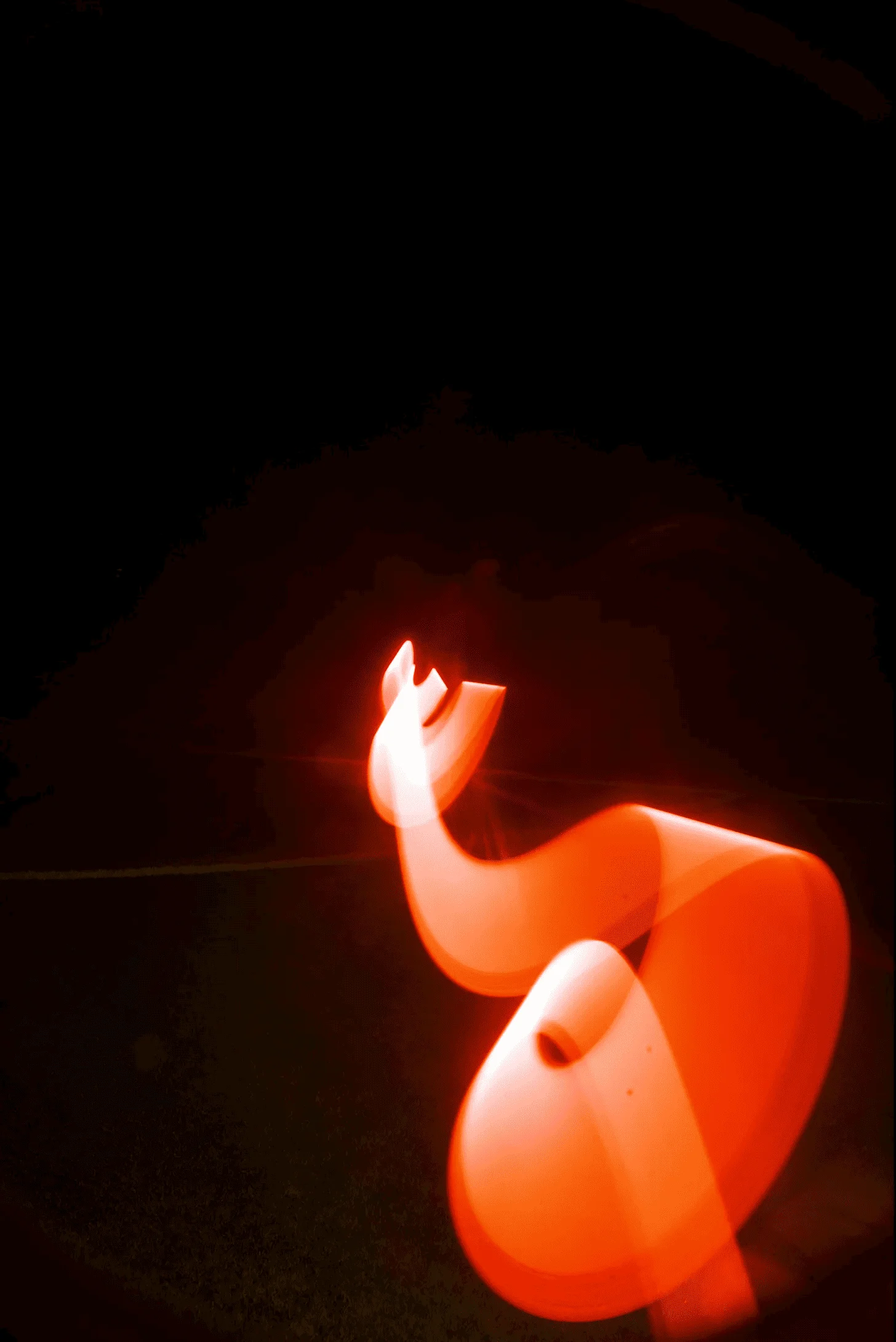
Nestled within the space between "you"* and the individual(s) before you exists an opportunity to cultivate a more authentic experience.
The present, often hailed as the paramount point of focus, the most deserving of our attention, is only part of what we ought to attend. The adage "There is no time like the present" exemplifies this idea. However, I wish to discuss something entirely different— a place devoid of strict temporal definitions, the internal world, which refers to the realm of our thoughts, emotions, and consciousness. When the external is no longer in harmony with the internal and a chasm forms in the absence of that harmony, what fills the space and reverberates off the walls? Is it a voice encumbered with shame, the voice of a caretaker (for some, this voice is the same as the aforementioned), a voice of divinity? Is it "you"*?
The echoes are not to be experienced as a monologue but as a dialogue or, more accurately, not merely as 'the self' in its static form but as a thunderstorm of internal voices, feelings, and external influences.
This distinction is crucial, as it highlights that the self we are addressing here is not a singular, unchanging entity defined by fixed traits or qualities people often grasp onto to describe themselves(i.e., 'I'm always late'). Instead, it refers to the self as an evolving, dynamic construct shaped by endless interactions within and around us.
This perspective makes an intriguing point but overlooks the potential of self-awareness and intentional change.
For instance, Foucault also argues that power is not solely repressive but also generative of resistance. To counter bio-power, individuals can engage in "counter-conducts"—actions that disrupt societal norms governing internal dialogue, reclaiming autonomy. These counter-conducts involve questioning and challenging the norms and discourses governing internal dialogue, reclaiming agency over our thoughts and actions. By peeling back a layer and contemplating the reactions that motivate our actions, we gain light in the darkness, the ability to consciously alter our outward reactions, and, more importantly, the ability to discern whether we are in the right* place or around the right* people.
However, these can be incredibly challenging tasks to accomplish.
They demand ongoing and sometimes rigorous self-examination and the courage to confront compelling societal beliefs cooked by Michelin-starred chefs, gracefully lifted and served by our social spheres, and the seemingly insignificant influences we internalize daily, akin to a tiny hair in the food that goes unnoticed. Recognizing these unseen elements suggests that certain aspects of ourselves are elusive and primarily undetectable despite any amount of mindfulness.
Consequently, we are often led back to our primary focus: the emotions we experience and the inner dialogues we engage in. Can they be trusted? If a random passerby embodied or personified the voice(s) in your head, what would you think of them? Are the voices a reflection of the society and discourses in it? Are they a result of experiences? Primal desires? Are they guided by a search for meaning, or are they simply a replay of externalities? Are they what you truthfully want to hear, or is self-deception at play? Are they compassionate, considerate, passionate, or belligerent? They could be all of the above or none of the above. I have no clue. Ask yourself until the end of your time.
With thrifting gaining renewed traction, it opens a gateway for younger generations to embrace sustainable practices. It fosters a shared space where values like environmental stewardship and creativity intersect, encouraging exploration of interconnected ideals such as biophilic design. Through these practices, thrifting not only addresses overconsumption but also nurtures a deeper connection to nature, heritage, and community.
*1. in the meta-communicative sense of the concept of you. The concept of 'you' is not fixed but fluid and evolving.
*2. in harmony with one's core values and nature. Not referring to the more rigid concept of right and wrong
Photos: “Eyo.Alexander”
Music: “Eyo?”
READ MORE
OTHER RELATED POSTS





DESIGNING FOR LEGACY: BLACK FASHION, SUSTAINABILITY...
RECENT CONSUMPTIONS OF FALL to WINTER 2025
READ MORE
OTHER RELATED POSTS
DESIGNING FOR LEGACY: BLACK FASHION, SUSTAINABILITY...